Recent developments in modern Hodge theory
Workshop
Start date: 05.12.2025
End date: 12.12.2025
Event location: Institute of Mathematics and Informatics, Bulgarian Academy of Sciences
This conference will survey some new results in modern Hodge theory and related topics.
The conference is organized by ICMS Sofia, IMSA Miami and supported by Simons foundation.
Programme
December 5, 2025 (Friday)
Pre-Workshop Session
10:00–11:00 M. Smirnov (Bonn)
Title: Quantum cohomology and Lefschetz collections for G/P
Abstract: For a Fano variety $X$, Dubrovin’s conjecture and mirror symmetry give a relation between the quantum cohomology of $X$ and its derived category. I’ll begin by a brief introduction to this subject and then present some results and conjectures on the structure of the Lefschetz collections on $G/P$ and how it relates to the small quantum cohomology of these varieties.
11:30–12:30 F. Guelerman (Paris)
Title: Baby Atoms, F-bundles and Hodge Atoms
Abstract: Our goal is to introduce the concept of atoms, introduced by Kontsevich, Katzarkov, Pantev and Yu as a way of applying Gromov-Witten theory to rationality problems. I’ll start with a baby version of the concept, for hypersurface singularities and, after that, introduce F-bundles and the A-model F-bundle and explain how to define atoms for a variety $X$. It will be a purely expository talk.
13:30–14:30 A. Novikov (ICMS)
Title: Multiple fibers of Lagrangian fibrations on hyperkahler manifolds
Abstract: Let $f$ be a Lagrangian fibration on a compact hyperkahler manifold. I will prove that $f$ has no multiple fibers in codimension 1. The proof uses the stability of the tangent bundle and the Demailly-Peternell-Schneider vanishing theorem. This is a work in progress, joint with Ljudmila Kamenova.
15:00–16:30 TBA
17:30 V. Tsanov (IMI Sofia)
Title: Torus knots, triangle groups and cusp forms
Abstract: A beautiful construction, due to Quillen, shows that the complement of a trefoil knot in the 3-sphere is diffeomorphic to SL(2,R)/SL(2,Z), providing an explicit diffeomorphism by means of modular forms. I will explain how this construction generalizes for all torus knots and the universal cover of SL(2,R), and why only the complement of the trefoil is homogeneous under the linear group SL(2,R). A key ingredient is a hyperbolic model for the characteristic morphism of the Milnor fibration of a cusp form.
December 8, 2025 (Monday)
Lectures I
10:00 Opening Session
10:00–11:30 Semon Rezchikov (IHES)
Title: Arithmetic aspects of noncommutative Hodge theory (Course)
Abstract: We will review the basics of noncommutative Hodge theory, which is based on the algebraic structure of Hochschild homology and its relationship to enumerative geometry (in the symplectic context) and to classical Hodge theory (in the commutative algebraic context). By replacing Hochschild homology with Topological Hochschild homology in an appropriate manner, one can enhance noncommutative Hodge structures with arithmetic data. We will explain the resulting algebraic structures, and discuss how they (conjecturally) should be manifested in the context of symplectic enumerative geometry, in terms of certain concrete computational aspects of Gromov-Witten theory and in terms of equivariant holomorphic curve counts.
11:30–13:00 Laurent Meersseman (Anger)
Title: Panorama of LVMB manifolds
Abstract: I will give a panorama of LVMB manifolds, a class of non-kähler manifolds, with emphasis on their Hodge theoretic aspects. This last part is joint work with L. Katzarkov, K.S. Lee and E. Lupercio.
13:00–14:00 Lunch
14:00–15:00 Philip Candelas (Oxford)
Title: On Feynman integrals and Special Fano Geometry
15:30–16:30 Philip Candelas (Oxford)
Title: A One Parameter Family of Calabi-Yau Manifolds with Attractor Points of Rank Two
17:00–18:00 S. Reschikov (IHES)
18:00 Refreshments
December 9, 2025 (Tuesday)
Lectures II
10:00–11:30 Leonardo F. Cavenaghi (ICMS)
Title: Course: Hodge Atoms and Gromov-Witten Invariants
Abstract:
Basics on Gromov-Witten invariants, F-bundles, and A-model F-bundle: This is a more introductory talk (long lecture), aimed at setting the background to understand the theory of Hodge atoms. We shall quickly recall some basics on Gromov-Witten theory and F-bundles, aiming to define the notion of A-model F-bundle. We conclude by explaining the concept of Hodge atoms heuristically, following Katzarkov, Kontsevich, Pantev, and Yu.
11:30–12:30 Ernesto Lupercio (ICMS)
Title: TBA – Course
12:30–13:30 S. Reschikov (IHES)
December 10, 2025 (Wednesday)
Research Talks
09:30 Opening
09:30–10:30 Ernesto Lupercio (ICMS)
11:00–11:45 Maxim Kontsevich (IHES)
Title: On moduli of saturated categories and their SOD
Abstract: I will present a simple argument which shows that for any family of smooth compact categories, a semi-orthogonal decomposition at a point in parameter space extends to an étale neighborhood.
11:45–12:30 Laurent Meersseman (Anger)
Title: Teichmüller stacks of non-Kähler manifolds
Abstract: Analytic stacks can be used to define a stacky version of the Teichmüller space of a compact complex manifold which is fitted for non-Kähler manifolds. I shall explain how it works and why it is usually wilder than a moduli stack of projective structures.
12:30–14:00 Lunch
14:00–15:00 Stefan Ivanov (Sofia)
Title: Integrable $G_2$ manifolds, instanton curvature and parallel torsion
Abstract: The interest of integrable $G_2$ manifolds arises from the supersymmetric heterotic string background in dimension seven since these spaces admit a unique linear connection $nabla$ with skew-symmetric torsion preserving the $G_2$ structure, called the characteristic connection. Hence, the characteristic connection with torsion 3-form preserves a non-trivial spinor. The characteristic curvature and torsion are investigated. In particular, it is shown that on an integrable $G_2$ manifold with $nabla$-parallel Lee form the characteristic curvature is a $G_2$ instanton exactly when the torsion 3-form is $nabla$-parallel.
15:15–16:15 Paul Horja (IMSA)
Title: A categorical view of extremal transitions
Abstract: Conifold transitions have been employed by string theorists in their study of Calabi-Yau of varieties since the 1980’s. In 1999, Dave Morrison extended the notion under the name extremal transition in the context of mirror symmetry. In this talk, I will present a categorical point of view on this notion and discuss how it fits together with the conjecture of Aspinwall-Plesser-Wang on discriminants in stringy moduli spaces.
16:15–17:15 G. Grancharov (FIU)
Title: Some (differential) geometric applications of twistor spaces
Abstract: I’ll review the definition of twistor space over 4-dimensional Riemannian and pseudo-Riemannian manifold and report on some of its properties. Then I’ll explain its relation to the compatible complex structures structures and some further extensions to the higher dimensions.
December 11, 2025 (Thursday)
Research Talks
09:30–10:30 Nicoletta Tardini (Parma)
Title: Pluriclosed manifolds with parallel Bismut torsion
Abstract: Several special non-Kahler Hermitian metrics can be introduced on complex manifolds. Among them, pluriclosed metrics deserve particular attention. They can be defined on a complex manifold by saying that the torsion of the Bismut connection associated to the metric is closed. These metrics always exist on compact complex surfaces but the situation in higher dimension is very different. We will discuss several properties concerning these metrics also in relation with the torsion of the Bismut connection being parallel. This is joint work with G. Barbaro and F. Pediconi.
11:00–12:00 Matthieu Madera (Nice)
Title: TBA
12:00–13:00 S. Schreieder (Hannover)
Title: Retract irrational hypersurfaces (Short Course – Lecture 1)
Abstract: In this short course, I will discuss the notion of retract rational varieties, with a particular focus on hypersurfaces in projective space. This concept is closely related to the classical problem of parametrizing solutions of polynomial equations by rational functions. I will then present various results and methods that show that very general hypersurfaces in certain degree and dimension ranges are not retract rational. Toward the end of the course, I will concentrate on the case of cubic threefolds, which is recent joint work with Philip Engel and Olivier de Gaay Fortman.
13:00–14:00 Lunch
14:00–15:00 L. Cavenaghi (ICMS)
Title: Hodge atoms
Abstract: This talk aims to define Hodge atoms and present some examples. We shall sketch the proof of the non-rationality of very generic cubic fourfolds by Katzarkov-Kontsevich-Pantev-Yu.
15:15–16:15 S. Schreieder (Hannover)
Title: Retract irrational hypersurfaces (Short Course – Lecture 2)
16:30–17:30 S. Schreieder (Hannover)
Title: Retract irrational hypersurfaces (Short Course – Lecture 3)
19:00 Dinner
December 12, 2025 (Friday)
Research Talks and Closing
09:30–10:30 L. Cavenaghi (ICMS)
Title: Equivariant Hodge atoms
Abstract:In this talk, we define G-equivariant Hodge atoms and explain, shortly, how they can be combined with the theory of symbols by Kontsevich-Pestun-Tschinkel to produce new birational invariants in G-equivariant birational geometry. We conclude by describing how to enhance the theory with Chen-Ruan cohomology information to produce refined invariants, thereby defining (families of) Mendeleev birational tables for encoding G-equivariant birational types.
11:00–12:00 E. Lupercio (ICMS)
12:00–13:00 Lunch
13:00–14:00 G. Neto (ICMS)
Title: Atoms for flag varieties
Abstract: In this talk, we present a method for explicitly computing the Atoms associated with several flag varieties, proceeding through Gromov–Witten theory and quantum cohomology before arriving at the final computation of the Atoms.
14:15–15:15 Lino Grama (Campinas)
Title: SYZ for almost abelian Lie groups
Abstract: In this talk, we discuss SYZ mirror symmetry in the non-Kähler context, in the sense of Lau-Tseng-Yau. We construct SYZ dual pairs for a family of solvmanifolds called almost abelian, and we explore applications related to dualities between Bott-Chern and Tseng-Yau cohomologies. This is joint work in progress with L. Cavenaghi, L. Katzarkov, and P. Muniz.
15:30–16:30 P. Muniz (Campinas)
Title: Bicomplexes and candidate to new symplectic cohomologies
Abstract: In this talk, we aim to shed light on the construction of Tseng-Yau cohomology using the framework of Poisson cohomology. We will explore bicomplexes that resemble those derived from the periodic cyclic complex. Additionally, we will define new cohomology theories and demonstrate how to refine Tseng-Yau cohomology in a precise manner. Our discussion will also cover non-Kähler SYZ for these cohomology theories. This work is a collaboration in progress with Cavenaghi, Grama, and Katzarkov.
16:30 L. Katzarkov (ICMS)
Title: Prym Tjurin atoms
Abstract: We will discuss atoms related to vanishing cycles.
Venue
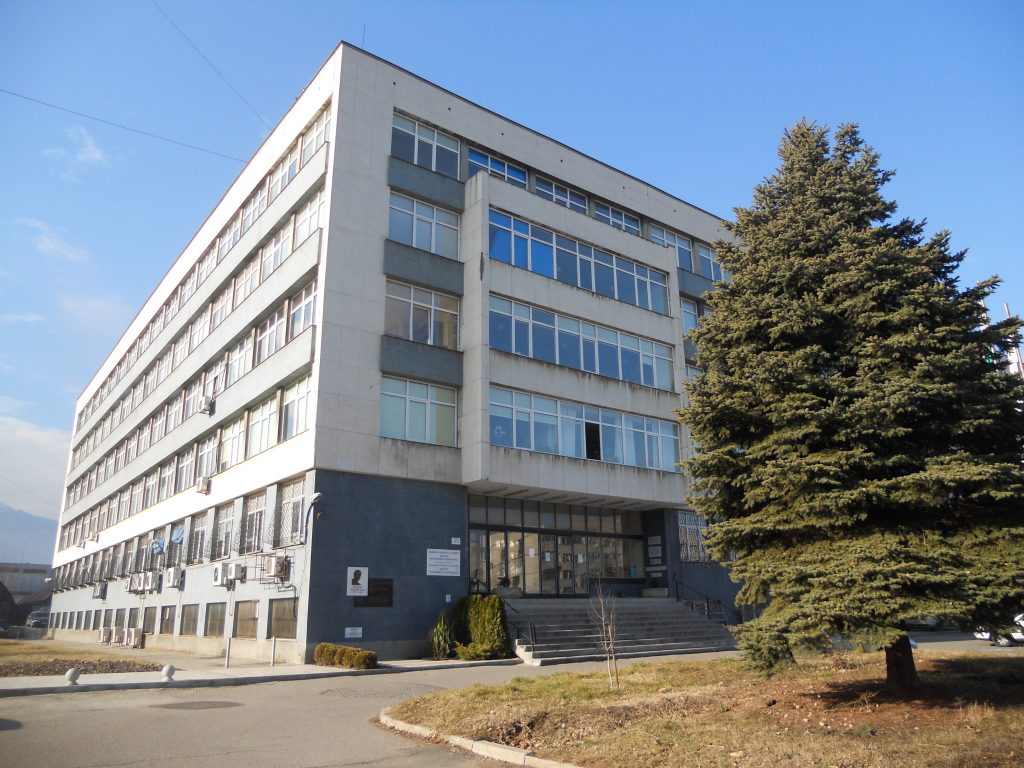
Institute of Mathematics and Informatics at the Bulgarian Academy of Sciences
Funded by